
PERSONAL BRANDING
Personal Branding: Building a Strong Personal Brand in the Digital Age
In today’s digital world, people are no longer judged only by their qualifications, job titles, or academic achievements. Before working with someone, hiring them, or purchasing a service from them, people often search for them online. They look at their social media profiles, websites, portfolios, content, and professional presence. This is where personal branding becomes important.
Personal branding is the process of presenting your skills, knowledge, personality, values, and experience in a clear and consistent way. It helps people understand who you are, what you do, and what makes you different from others in the same field.
For professionals, freelancers, entrepreneurs, students, and digital marketers, building a strong personal brand can create valuable opportunities. A well-developed personal brand can improve credibility, increase visibility, attract clients, and help you build meaningful professional relationships.
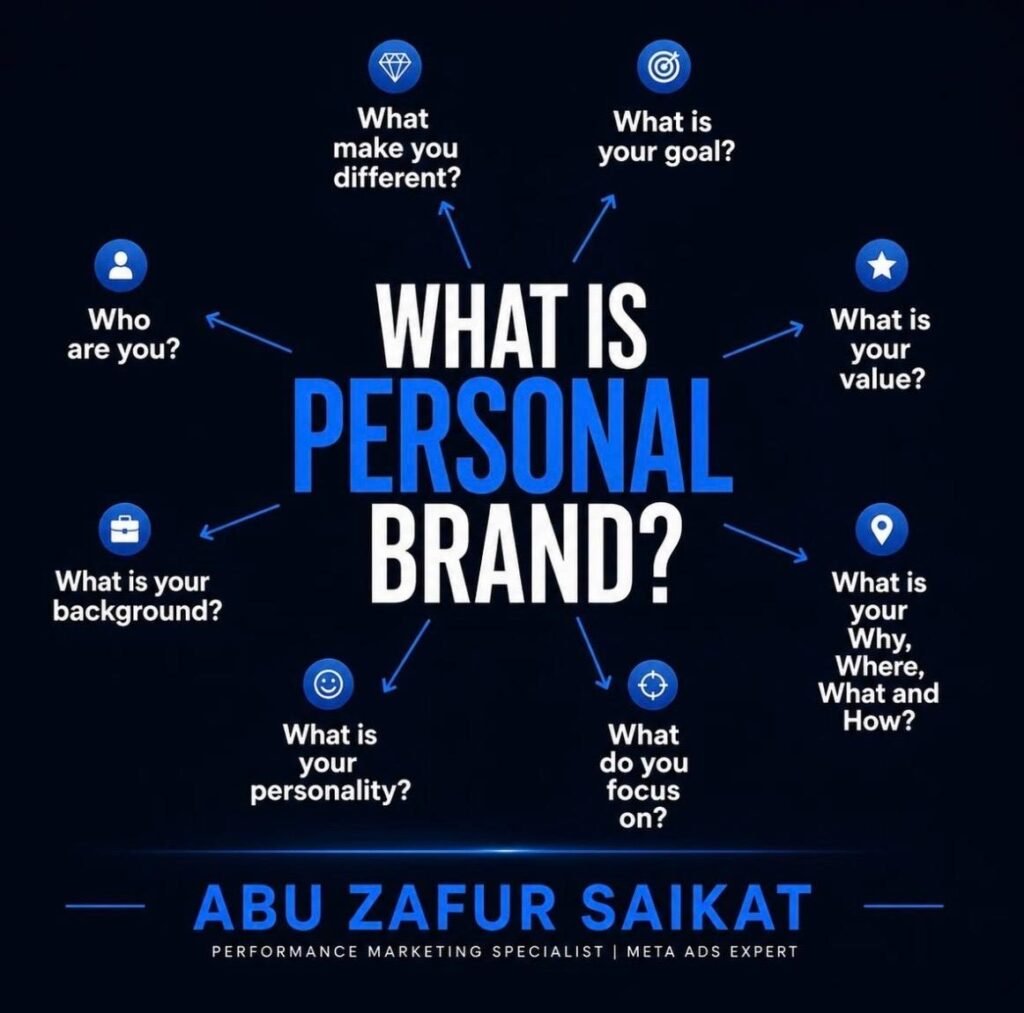
What Is Personal Branding?
Personal branding is the way you intentionally communicate your professional identity to other people. It includes everything people associate with you, from your skills and expertise to your communication style, online presence, and professional reputation.
A personal brand is not simply a logo, profile picture, or attractive website. Those elements can support a brand, but personal branding goes much deeper. It is about creating a clear identity that people can recognize and remember.
For example, if someone consistently shares useful content about SEO, social media marketing, and content strategy, people may begin to recognize that person as someone knowledgeable in digital marketing.
Your personal brand should answer three basic questions:
- Who are you?
- What do you do?
- Why should people choose or trust you?
When these answers are clear and consistent, your personal brand becomes stronger.
Why Personal Branding Is Important
The internet has made it easier than ever for professionals to showcase their work. At the same time, it has created more competition. Many people have similar qualifications and skills, so simply saying that you are talented may not be enough.
A strong personal brand helps you stand out.
When people repeatedly see your work, ideas, knowledge, and professional personality, they become more familiar with you. Over time, this familiarity can develop into trust.
Personal branding is particularly valuable in digital marketing because digital marketers are expected to understand online platforms, content, communication, branding, and audience behavior. Your own online presence can become an example of your marketing skills.
Personal Branding and Digital Marketing
Personal branding and digital marketing are closely connected. Digital marketing focuses on promoting businesses, products, and services online, while personal branding focuses on building an individual’s professional identity.
Many of the same digital marketing strategies can be used for personal branding.
For example, SEO can help your personal website appear in search engine results. Social media marketing can help you connect with your audience. Content marketing can demonstrate your knowledge. Email marketing can help you maintain relationships with your audience.
By combining these strategies, you can create a strong digital presence around your personal brand.
Define Your Personal Brand
Before creating content or designing a website, you should first understand what you want your personal brand to represent.
Start by identifying your skills, interests, strengths, experience, and professional goals.
If you are a digital marketer, for example, you may want your personal brand to focus on areas such as:
- Search Engine Optimization
- Social Media Marketing
- Content Marketing
- Email Marketing
- Digital Advertising
- Website Optimization
- Personal Branding
You do not have to present yourself as an expert in everything. In fact, having a clear focus can make your brand easier to understand.
Ask yourself what type of work you enjoy, what skills you want to develop, and what kind of opportunities you want to attract.
Identify Your Target Audience
A personal brand becomes more effective when you know who you are trying to reach.
Your audience could include potential employers, clients, business owners, recruiters, fellow marketers, entrepreneurs, or other professionals.
Understanding your audience helps you create relevant content.
For example, if your goal is to attract small business clients, you can create content explaining how SEO, social media, and content marketing can help small businesses grow.
If your goal is to find a digital marketing job, you can focus on demonstrating your knowledge, projects, certifications, practical experience, and learning journey.
The more clearly you understand your audience, the easier it becomes to communicate with them.
Build a Professional Online Presence
Your online presence is one of the most important parts of personal branding.
Start with a professional website or portfolio. Your website should clearly communicate who you are, what you do, your skills, your projects, and how people can contact you.
A professional personal website may include:
- Home
- About
- Services
- Skills
- Projects
- Blog
- Testimonials
- Contact
Your website does not need to be complicated. A clean and professional design can often be more effective than a website filled with unnecessary elements.
Your profile photo, colors, typography, writing style, and overall design should also feel consistent.
Create a Strong Personal Brand Statement
A personal brand statement is a short explanation of who you are and what you offer.
It should be simple, specific, and easy to remember.
Instead of using generic statements such as “I am passionate and hardworking,” try to communicate your actual value.
For example:
“I’m a digital marketing professional focused on SEO, social media marketing, and content strategies that help businesses build a stronger online presence.”
This type of statement gives people a clearer idea about your professional direction.
Use Social Media Strategically
Social media platforms can play a major role in personal branding.
You do not necessarily need to be active on every platform. Instead, focus on the platforms where your target audience is most likely to be present.
LinkedIn can be valuable for professional networking and career opportunities. Instagram can be useful for visual content and personal storytelling. YouTube can help you demonstrate knowledge through video. Other platforms can also be useful depending on your audience and industry.
The key is consistency.
Share useful information, project updates, professional experiences, industry insights, lessons you have learned, and content that reflects your expertise.
You do not have to post every day. What matters more is creating valuable content regularly.
Content Marketing for Personal Branding
Content is one of the strongest tools for building a personal brand.
When you consistently publish useful content, you give people a reason to follow and remember you.
You can create:
- Blog articles
- Social media posts
- Short videos
- Tutorials
- Case studies
- Infographics
- Industry insights
- Educational guides
- Project updates
For example, if you are learning SEO, you could write a blog about keyword research, on-page SEO, technical SEO, or common SEO mistakes.
You do not need to know everything before you start creating content. Sharing your learning journey can also make your brand authentic and relatable.
Build Credibility Through Your Work
One of the best ways to strengthen personal branding is to show what you can actually do.
Instead of only listing skills on your resume or website, demonstrate them through projects.
If you claim to understand SEO, show an SEO project. If you claim to understand social media marketing, show a social media campaign or content plan.
A portfolio provides evidence of your skills.
Even if you are a beginner, you can create practice projects. You can analyze an existing website, create a sample social media campaign, develop an SEO strategy for a fictional business, or build your own personal website.
These projects can demonstrate your ability to apply theoretical knowledge in practical situations.
Be Consistent
Consistency is one of the most important principles of personal branding.
Your name, profile image, colors, tone, professional information, and messaging should be reasonably consistent across platforms.
For example, if your website presents you as a digital marketing professional but your professional social media profiles contain completely unrelated information, people may find it difficult to understand your professional identity.
Consistency does not mean posting the same content everywhere. It means maintaining the same core identity while adapting content to each platform.
Authenticity Matters
Personal branding should not mean pretending to be someone you are not.
People can often recognize when content feels artificial or overly promotional.
Authenticity helps create stronger connections.
You can share your experiences, challenges, lessons, achievements, mistakes, and progress. You do not need to present yourself as perfect.
For someone building a career, saying “I am learning and improving my digital marketing skills through practical projects” can be more believable than claiming to be an expert in every area.
Your personal brand should grow with you.
Develop Your Professional Skills
Personal branding is not only about marketing yourself. You also need to continuously improve your actual skills.
The stronger your knowledge becomes, the more valuable your personal brand can become.
Digital marketing changes constantly. Search engine algorithms evolve, social media platforms introduce new features, advertising strategies change, and consumer behavior develops.
Therefore, continuous learning is essential.
You can improve your skills through online courses, certifications, practical projects, industry blogs, webinars, books, and hands-on experimentation.
Learning something is valuable, but applying it is even more valuable.
Networking and Personal Branding
Networking can significantly strengthen a personal brand.
Connect with professionals in your field, participate in relevant discussions, attend events, join communities, and communicate with people whose work interests you.
Networking should not simply be about asking people for jobs or opportunities.
Instead, focus on building genuine professional relationships.
Comment thoughtfully on relevant posts, share useful ideas, congratulate people on their achievements, and participate in meaningful conversations.
Over time, these interactions can increase your visibility and help you become part of a professional community.
Personal Branding Through LinkedIn
LinkedIn is particularly useful for professional personal branding.
Your LinkedIn profile should clearly communicate your professional identity.
Pay attention to your:
- Profile photo
- Headline
- About section
- Skills
- Experience
- Projects
- Certifications
- Featured content
- Recommendations
Your headline should explain what you do rather than simply stating a job title.
Your About section can tell your professional story, explain your interests, highlight your skills, and describe the type of opportunities you are interested in.
Regularly sharing useful professional content can also increase your visibility.
SEO for Personal Branding
SEO can help people discover your personal brand through search engines.
If you have a personal website, optimize important pages around relevant keywords.
For example, instead of creating a page that only says “About Me,” you could naturally include information such as your profession, services, skills, and location where appropriate.
Your blog can also target relevant search queries.
For example, a digital marketer could write articles such as:
- What Is SEO and Why Is It Important?
- How Social Media Marketing Helps Businesses
- Beginner’s Guide to Keyword Research
- How to Build a Digital Marketing Strategy
- Importance of Content Marketing
The goal should not be to fill your website with keywords. The goal is to create genuinely useful content that answers what people are searching for.
Common Personal Branding Mistakes
Building a personal brand takes time, and there are several common mistakes to avoid.
Trying to Be Everything
Trying to promote yourself as an expert in every area can make your brand unclear.
Choose a few areas that represent your professional direction.
Copying Other People
It is fine to learn from successful professionals, but copying their personality, content, or style can make your brand feel generic.
Learn from others while developing your own voice.
Inconsistent Activity
Posting frequently for a short period and then disappearing for months can make it difficult to build momentum.
Choose a realistic schedule that you can maintain.
Focusing Only on Promotion
If every post is about your services, people may lose interest.
Provide value first. Educate, inform, share experiences, and participate in conversations.
Ignoring Your Reputation
Everything you publish online can contribute to your personal brand.
Think carefully before posting content that could negatively affect your professional reputation.
Measure Your Personal Branding Progress
Personal branding should not be based only on follower counts.
You can measure progress using several indicators:
- Website traffic
- Search visibility
- Social media engagement
- Profile views
- Professional connections
- Portfolio inquiries
- Job opportunities
- Client inquiries
- Content performance
These metrics can help you understand what is working and where you need to improve.
For example, if one type of blog consistently receives more traffic than others, it may indicate that your audience is interested in that topic.
Use this information to improve your future content strategy.
The Long-Term Value of Personal Branding
Personal branding is not a one-time marketing campaign. It is a long-term process.
Your skills will change. Your career will develop. Your interests may evolve. Your personal brand should evolve with you.
A strong personal brand can create opportunities even when you are not actively looking for them.
Potential clients may discover your website. Recruiters may find your LinkedIn profile. Businesses may see your portfolio. Professionals may recommend you because they recognize your work.
This is one of the biggest advantages of building a digital personal brand.
Conclusion
Personal branding has become an important part of professional growth in the digital age. It allows individuals to communicate their skills, knowledge, personality, and professional goals to a wider audience.
Building a strong personal brand requires more than creating a professional profile or attractive website. It requires consistency, authenticity, useful content, continuous learning, networking, and the ability to demonstrate real skills.
For digital marketers especially, personal branding can become a practical demonstration of their own marketing abilities. Your website, SEO strategy, social media presence, content, and portfolio can all become part of your professional identity.
The most important thing is to start with clarity. Understand who you are, what you can offer, who you want to reach, and what you want to be known for.
You do not need to build a perfect personal brand overnight. Start small, create useful content, showcase your work, learn continuously, and improve your online presence step by step.
Your personal brand is the reputation you build through what you do, what you share, and how consistently you show up.